Phytonutrient Diversity
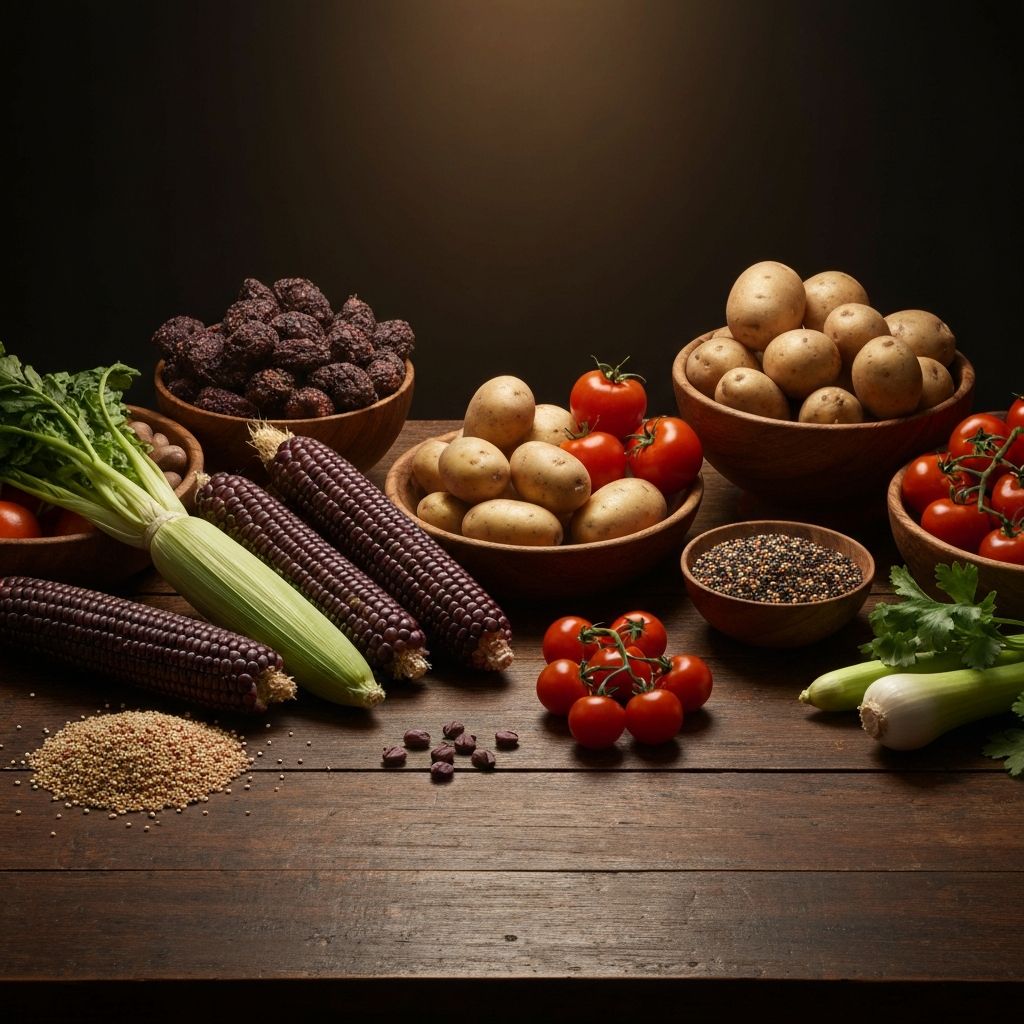
Plants produce thousands of bioactive compounds — polyphenols, flavonoids, carotenoids — that are absent from animal foods and are the subject of ongoing nutritional research.
An independent educational resource exploring the science, culture, and physiology of food and nutrition.
Macronutrients are the primary categories of nutrients the human body requires in relatively large amounts to sustain energy, growth, and overall physiological function. They consist of three fundamental classes: carbohydrates, proteins, and fats.
Each macronutrient has a distinct chemical structure that directly influences how it is metabolized and utilized by the body. Carbohydrates are chains of sugar molecules; proteins are sequences of amino acids; and fats are formed by fatty acid chains bonded to glycerol.
Understanding their roles provides a scientific foundation for appreciating how the body sustains itself through the foods we consume.
Learn MoreA systematic categorization of vitamins and minerals and their roles in bodily functions.
A fat-soluble vitamin found in orange and yellow vegetables. It plays a role in vision adaptation to low-light conditions and supports epithelial tissue integrity.
Sources: Carrots, sweet potato, leafy greens, eggs.
A water-soluble antioxidant that contributes to collagen synthesis, the structural protein that supports skin, cartilage, and bones.
Sources: Citrus fruits, bell peppers, broccoli, kiwi.
A mineral that is a core component of hemoglobin, the protein in red blood cells responsible for transporting oxygen throughout the body.
Sources: Legumes, dark leafy greens, quinoa, seeds.
The most abundant mineral in the body, essential for bone and tooth structure, as well as muscle contraction and nerve signal transmission.
Sources: Dairy products, fortified plant milks, almonds, kale.
A fat-soluble vitamin synthesized by the skin upon exposure to sunlight. It regulates calcium absorption and plays a role in bone mineralization.
Sources: Sunlight exposure, fatty fish, fortified foods, egg yolks.
An electrolyte mineral that helps maintain fluid balance, supports normal muscle function, and contributes to healthy nerve transmission.
Sources: Bananas, potatoes, beans, avocados, spinach.
Vitamins A, D, E, and K, which are absorbed alongside dietary fats and stored in the body's fatty tissues.
Vitamins C and the B-complex group, which dissolve in water and are not stored in large quantities, requiring regular dietary intake.
Minerals such as calcium, phosphorus, and magnesium, required in relatively larger quantities by the body.
Minerals including iron, zinc, and selenium, needed in smaller amounts but still essential for vital physiological processes.

Water is the most essential compound in the human body, constituting approximately 60% of total body weight in adults. It serves as the primary medium for all biochemical reactions, nutrient transport, temperature regulation, and waste elimination.
The body maintains precise fluid balance through complex regulatory mechanisms involving the kidneys, hormones such as antidiuretic hormone (ADH), and the sensation of thirst.
A step-by-step overview of the human digestive process.
Food enters through the mouth where mechanical breakdown begins via chewing.
Enzymes in saliva, stomach, and small intestine chemically break down food molecules.
Nutrients pass through the intestinal wall into the bloodstream and lymphatic system.
Undigested material is compacted and expelled from the body via the large intestine.

The structure of whole foods influences their rate of digestion and nutrient release.

Certain botanicals such as ginger and fennel have been studied for their interaction with the digestive process.
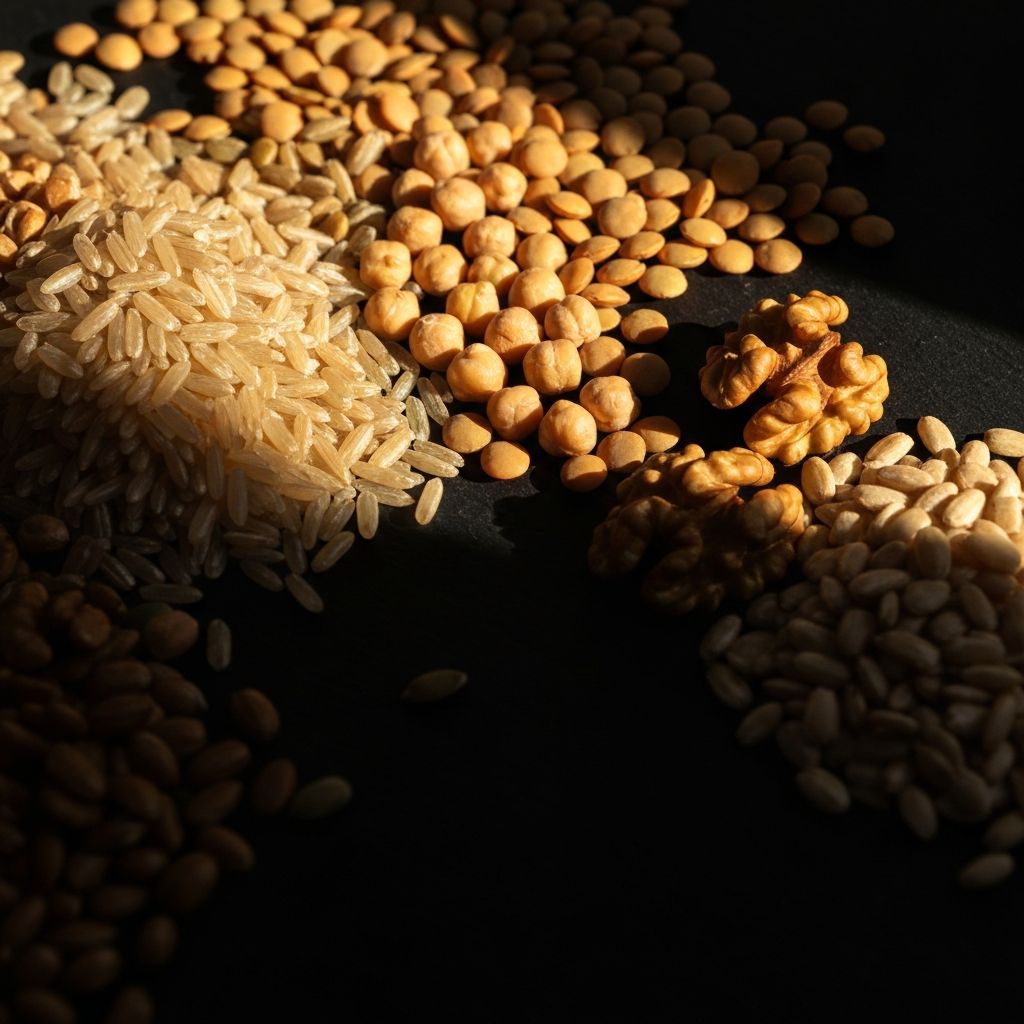
Whole grains and legumes provide dietary fiber that supports healthy gut transit time.
Digestion begins in the mouth. Teeth mechanically break food into smaller particles, increasing surface area for enzyme activity. Salivary amylase begins the enzymatic breakdown of carbohydrates. The tongue forms a bolus, which is propelled through the esophagus to the stomach via rhythmic muscular contractions known as peristalsis.
The stomach is a muscular sac that churns food with gastric acid and the enzyme pepsin, which begins protein digestion. The highly acidic environment (pH 1.5–3.5) also serves as a barrier against many pathogens. Food remains in the stomach for 2–4 hours, transforming into a semi-fluid mixture called chyme.
The small intestine, at approximately 6–7 meters long, is the primary site of nutrient absorption. Enzymes from the pancreas and bile from the liver complete the digestion of carbohydrates, proteins, and fats. Specialized projections called villi and microvilli dramatically increase surface area, facilitating the absorption of nutrients into the portal blood circulation.
The large intestine absorbs water and electrolytes from indigestible material. The gut microbiota, a diverse community of microorganisms, ferments certain dietary fibers, producing short-chain fatty acids. The remaining solid waste is stored in the rectum and eventually eliminated.
Understanding the contributions of each food group to overall dietary variety.
Fruits are rich in natural sugars, primarily fructose, alongside significant quantities of vitamins (especially Vitamin C), dietary fiber, and a diverse array of phytonutrients and antioxidants. Their vibrant colors reflect the presence of flavonoids, carotenoids, and polyphenols.
Vegetables represent one of the most nutritionally dense food categories, offering a broad spectrum of vitamins, minerals, dietary fiber, and bioactive compounds with minimal caloric density. Leafy greens are particularly concentrated in folate, iron, and Vitamins K and A.
Whole grains retain the bran, germ, and endosperm of the grain kernel, preserving its fiber, B vitamins, minerals, and phytochemicals. Common examples include oats, brown rice, quinoa, barley, and whole wheat. They provide a sustained source of energy due to their complex carbohydrate structure.
Dietary protein is derived from both animal and plant sources. Animal proteins (meat, poultry, fish, eggs, dairy) are considered complete, containing all essential amino acids. Plant proteins (legumes, tofu, nuts, seeds) may lack certain essential amino acids individually but can complement each other within a varied diet.
Dairy products are well-recognized sources of calcium, phosphorus, and protein. Fortified plant-based alternatives (soy, almond, oat, rice milks) can provide comparable levels of calcium and Vitamin D, making them viable options within a varied dietary pattern.
Dietary fats are essential for energy storage, hormone synthesis, the absorption of fat-soluble vitamins (A, D, E, K), and cell membrane construction. Unsaturated fats, found in olive oil, avocados, nuts, and fatty fish, are a core component of traditional dietary patterns like the Mediterranean diet.
| Food Group | Primary Macronutrient | Key Micronutrients | Key Role |
|---|---|---|---|
| Fruits | Carbohydrates (Sugars) | Vitamin C, Folate, Potassium | Antioxidant supply, hydration |
| Vegetables | Carbohydrates (Fiber) | Vitamin K, Iron, Folate, Calcium | Micronutrient density, fiber |
| Whole Grains | Complex Carbohydrates | B Vitamins, Magnesium, Iron | Sustained energy, fiber |
| Proteins | Protein | Iron, Zinc, B12, Omega-3 | Tissue repair, enzyme function |
| Dairy/Alternatives | Protein, Fat | Calcium, Vitamin D, Phosphorus | Bone mineral support |
| Fats and Oils | Lipids | Vitamin E, Essential Fatty Acids | Vitamin absorption, hormones |
Exploring the historical and cultural dimensions of traditional Peruvian dietary practices.
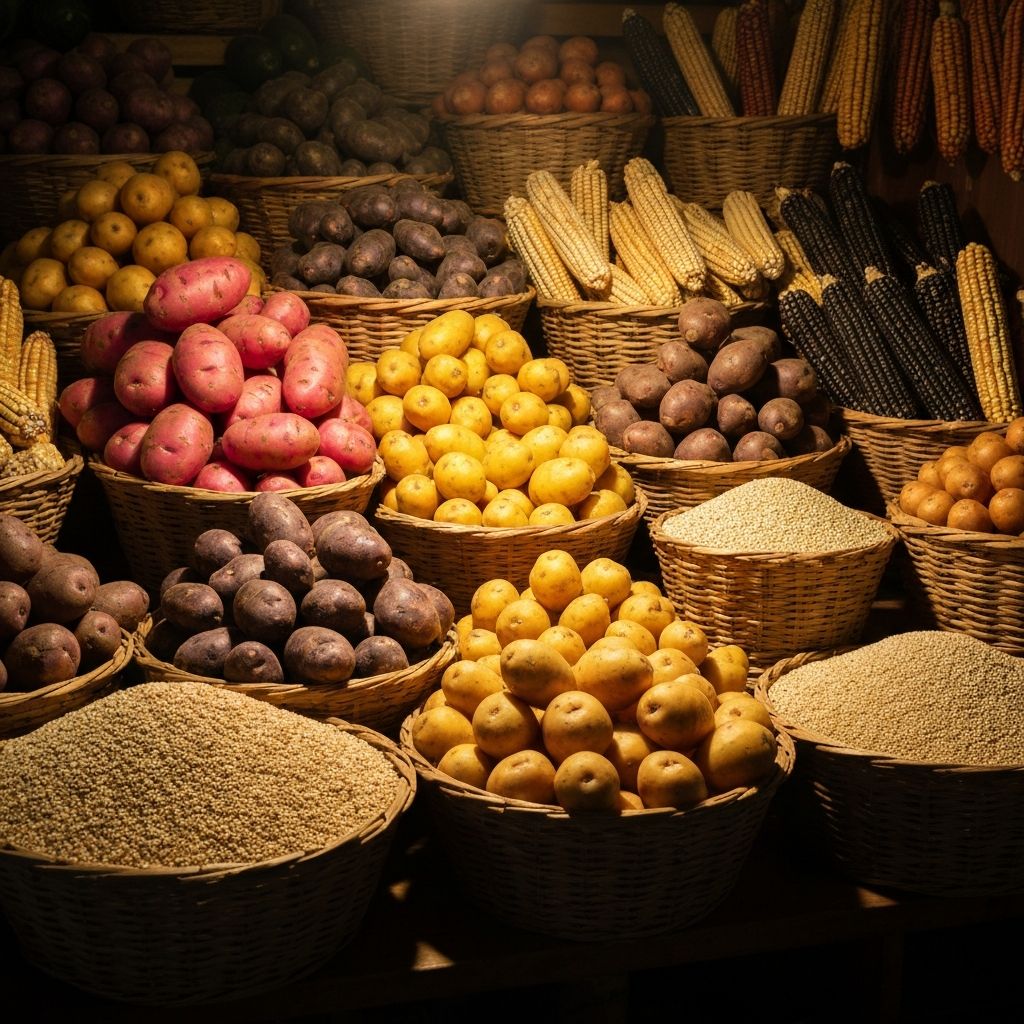
The territory that is modern-day Peru has been home to complex agricultural civilizations for thousands of years. The Andean region is considered one of the world's most significant centers of crop domestication, having given origin to hundreds of varieties of potatoes, maize, quinoa, and legumes.
This extraordinary biodiversity was not accidental. Andean peoples developed sophisticated agricultural technologies, including the terracing of mountainsides (andenes) and intricate irrigation systems, to cultivate food across radically different ecological zones from the coast to the high sierra and the Amazon basin.
The Inca Empire's food system was built on the principle of complementary ecological zones, exchanging products from the coast, mountains, and jungle to achieve nutritional variety.
Archaeological evidence in the Andes indicates early cultivation of squash, beans, and chili peppers along the Pacific coast and highland valleys, forming the earliest foundations of Andean food culture.
The potato (Solanum tuberosum) is domesticated in the region of the Altiplano, near Lake Titicaca. Over millennia, Andean farmers would develop over 3,000 distinct varieties, adapted to different altitudes and climates.
Quinoa (Chenopodium quinoa), a high-altitude grain rich in protein and amino acids, and maize (corn) became staple crops across much of the Andean region, forming the basis of the Inca diet alongside potatoes.
At its height, the Inca Empire operated a state-controlled agricultural and storage system. Freeze-drying techniques were used to create chuño (preserved potato) and charqui (dried meat), ensuring food security across the empire's vast territory.
The arrival of Spanish colonizers introduced new ingredients (wheat, rice, onions, chicken) while Andean foods traveled to Europe and beyond, fundamentally reshaping global diets. This exchange gave birth to the foundations of modern Peruvian cuisine.
Successive waves of Japanese, Chinese, Italian, and African immigration enriched Peruvian culinary culture, contributing techniques and ingredients that blended with Andean and Spanish foundations to create one of the world's most diverse culinary traditions.
The method by which food is prepared has a direct influence on its nutritional profile. Heat, water, oxygen, and processing methods can alter the concentration and bioavailability of vitamins, minerals, and other bioactive compounds.
Understanding these principles offers insight into why different preparation traditions have persisted across cultures and how they interact with the inherent nutritional properties of ingredients.
Preserves water-soluble vitamins better than boiling; retains natural color and texture by minimizing nutrient leaching into cooking water.
The Maillard reaction creates complex flavor compounds. Moderate temperatures preserve most nutrients, while high heat may reduce certain thermolabile vitamins.
An ancient technique that enhances digestibility, increases the bioavailability of certain minerals, and produces beneficial organic acids and B vitamins as metabolic byproducts of microbial activity.
Reduces the concentration of antinutritional factors such as phytic acid in grains and legumes, improving the absorption of iron, zinc, and calcium.
The two classifications of fiber and their distinct roles in digestive physiology.
Dietary fiber refers to the indigestible portions of plant foods — primarily complex carbohydrate structures that the human digestive enzymes cannot break down. Unlike digestible carbohydrates, fiber passes largely intact through the stomach and small intestine, reaching the colon where it plays distinct physiological roles.
Fiber is classified into two primary types based on its solubility in water, each with different physical properties and interactions with the digestive tract.
Dissolves in water to form a viscous gel. Slows digestion and glucose absorption. Found in oats, barley, apples, and legumes.
Does not dissolve in water. Adds bulk to stool, supporting regular intestinal movement. Found in whole wheat bran, vegetables, and nuts.
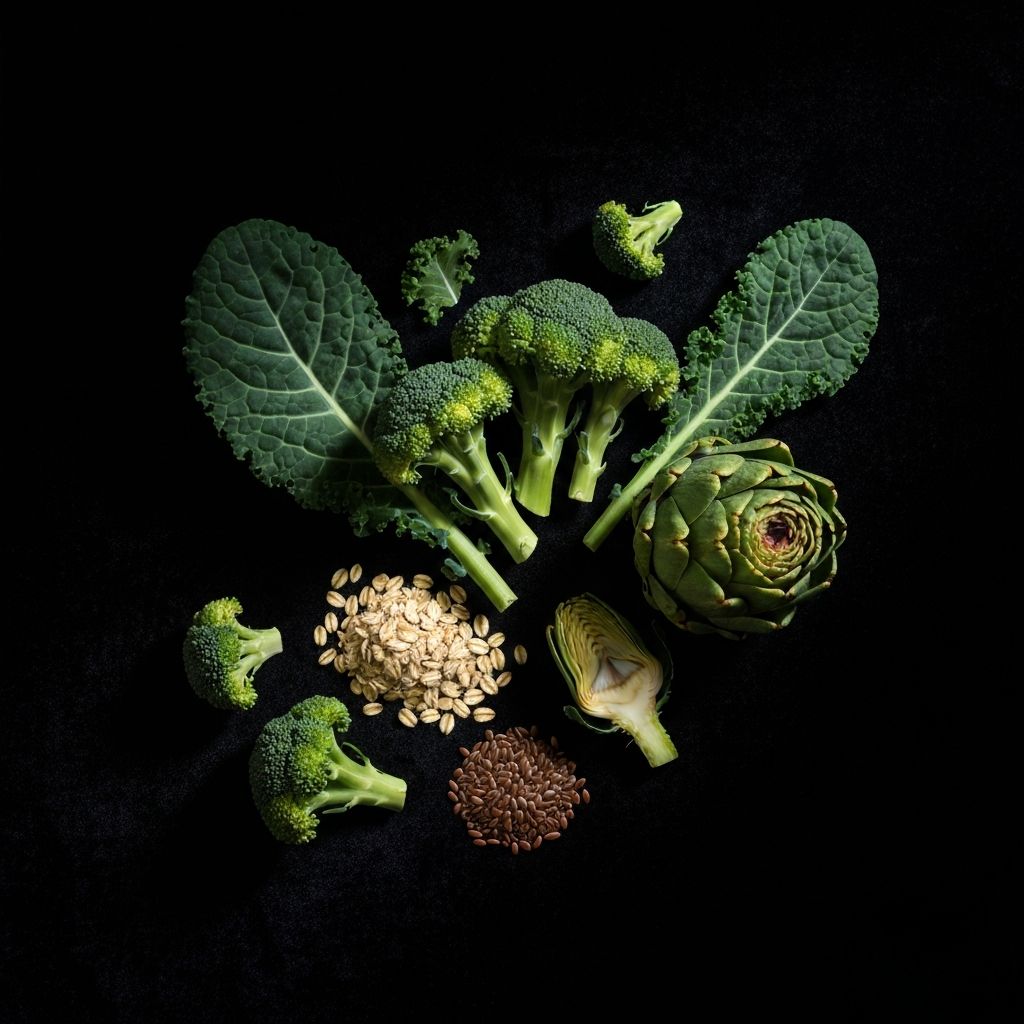
Certain soluble fibers, classified as prebiotics, serve as a substrate for beneficial colonic bacteria. These bacteria ferment the fiber, producing short-chain fatty acids (SCFAs) such as butyrate, acetate, and propionate. Butyrate, in particular, is the primary energy source for colonocytes (the cells lining the colon) and is the subject of active nutritional research.
Foods particularly concentrated in dietary fiber include legumes (lentils, chickpeas, black beans), whole grains (oats, barley, whole wheat, quinoa), vegetables (artichoke, broccoli, carrots, sweet potato), fruits (pears, apples, raspberries, bananas), and nuts and seeds (chia seeds, flaxseeds, almonds).
No. Dietary fiber is found exclusively in plant foods. Animal-derived foods such as meat, poultry, fish, eggs, and dairy contain no dietary fiber. This distinction is a key reason why the diversity of plant foods within a diet is emphasized from a nutritional perspective.
Plant-based dietary patterns are broadly defined as those in which the majority of caloric intake is derived from whole plant foods, including vegetables, fruits, legumes, whole grains, nuts, and seeds. This encompasses a spectrum of approaches from fully vegan diets to flexitarian patterns that emphasize plants while allowing moderate consumption of animal products.
These patterns have attracted considerable scientific attention due to the nutrient density, fiber content, and diversity of phytonutrients characteristic of plant foods. They are also studied in the context of traditional dietary practices from many global cultures, including the Andean tradition of Peru.
Plants produce thousands of bioactive compounds — polyphenols, flavonoids, carotenoids — that are absent from animal foods and are the subject of ongoing nutritional research.
Whole plant foods are the exclusive dietary source of fiber, supporting digestive function and providing substrate for the gut microbiome.
While individual plant proteins may be limited in one or more essential amino acids, diverse combinations of legumes, grains, and seeds throughout the day can meet all amino acid requirements.

Quinoa, one of Peru's most significant indigenous crops, is one of the few plant foods considered a complete protein source, containing all nine essential amino acids in nutritionally meaningful quantities.
Traditional Andean dietary practices, which emphasize diverse varieties of potatoes, maize, quinoa, and legumes, represent one of the world's oldest plant-centered nutritional traditions.
An alphabetical reference of key concepts explored throughout this resource.
Organic compounds that serve as the building blocks of proteins. Nine of the twenty standard amino acids are classified as essential because the human body cannot synthesize them and must obtain them from food.
Compounds that inhibit oxidation of other molecules. Found in abundance in fruits, vegetables, and whole grains, they neutralize reactive oxygen species (free radicals) in cells.
The proportion of a nutrient that is absorbed and used by the body from a consumed food. Bioavailability is influenced by food preparation, the presence of other nutrients, and individual physiological factors.
A group of eight water-soluble vitamins (B1, B2, B3, B5, B6, B7, B9, B12) that play important roles in cell metabolism, energy production, and nervous system function.
One of the three main macronutrients. Carbohydrates are organic molecules composed of carbon, hydrogen, and oxygen, classified as simple (sugars) or complex (starches and fiber).
A class of natural pigments found in plants, responsible for red, orange, and yellow colors. Beta-carotene is a precursor to Vitamin A.
Minerals that carry an electrical charge when dissolved in water, including sodium, potassium, calcium, and magnesium. They regulate fluid balance, nerve signals, and muscle contractions.
The building blocks of most lipids. Classified as saturated, monounsaturated, or polyunsaturated based on their chemical structure and the presence of double bonds.
The indigestible portion of plant foods, classified into soluble and insoluble types. Fiber is not broken down in the small intestine but plays important roles in large intestinal function.
A large class of polyphenolic compounds found in plants, including fruits, vegetables, tea, and cocoa. Widely studied for their antioxidant properties.
A ranking system for carbohydrate-containing foods based on how quickly they raise blood glucose levels relative to a reference food (typically pure glucose or white bread).
The complex community of microorganisms (bacteria, fungi, viruses, and other microbes) residing in the human gastrointestinal tract, playing roles in digestion, nutrient synthesis, and immune modulation.
The process of providing an adequate supply of water to the body's tissues to maintain physiological homeostasis, supporting functions from temperature regulation to cellular metabolism.
A broad group of naturally occurring molecules that are hydrophobic (insoluble in water), including fats, oils, waxes, and sterols. They serve as energy stores, structural components of cell membranes, and precursors to hormones.
Nutrients required by the body in large amounts, specifically carbohydrates, proteins, and fats. They provide the energy (measured in kilocalories) needed for bodily functions.
Vitamins and minerals required in smaller quantities but essential for diverse physiological processes, including bone formation, immune function, and enzymatic reactions.
Substances from food that the body uses to function. Divided into macronutrients (carbohydrates, proteins, fats) and micronutrients (vitamins and minerals), as well as water.
A type of polyunsaturated fatty acid where the first double bond is located at the third carbon from the methyl end. Found in fatty fish, flaxseeds, and walnuts. ALA, EPA, and DHA are the most studied forms.
The wave-like muscular contractions that propel food and digestive contents along the gastrointestinal tract from the esophagus to the colon.
Bioactive compounds produced by plants, including polyphenols, carotenoids, and glucosinolates. They are not classified as essential nutrients but are the subject of ongoing research.
One of the three main macronutrients. Proteins are large, complex molecules composed of amino acid chains, essential for tissue structure, enzyme function, and immune responses.
Fatty acids with fewer than six carbon atoms, produced by the fermentation of dietary fiber by colonic bacteria. Butyrate, propionate, and acetate are the most abundant SCFAs.
Organic compounds required in small amounts for essential metabolic processes. Classified as fat-soluble (A, D, E, K) or water-soluble (C and B-complex).
Foods that are minimally processed and remain as close to their natural state as possible, retaining their full complement of nutrients, fiber, and bioactive compounds.